



DRX9000 spinal decompression is not the same as traditional traction. Traction pulls on the spine with a steady force that often makes the surrounding muscles tighten and resist, while the DRX9000 targets a specific spinal level with a computer-controlled force curve designed to work around that resistance. The goal is to lower pressure inside the disc, which may help draw bulging material back in and ease pressure on irritated nerves.
Why decompression and traction get confused
Both treatments gently stretch the spine, so it’s easy to see why people lump them together. Many patients have tried traction in physical therapy, on an inversion table, or with an over-the-door neck device. When that didn’t help much, they assume decompression won’t either.
That’s a fair concern, and it’s one we hear often from patients across Brooklyn. The difference comes down to how the force is applied and how your body responds to it.
What makes the DRX9000 different
It works around muscle guarding
When your spine is pulled suddenly or with a steady force, the muscles around it naturally tighten to protect it. That reflex is called muscle guarding, and it can cancel out much of what traction is trying to do. The DRX9000 uses a gradual force curve that ramps up and eases off, so the muscles are more likely to stay relaxed.
It targets the problem level
The system is set up to focus on the spinal level where the disc problem is, rather than stretching your whole spine evenly. That’s one reason your exam, and any imaging you already have, matters before we begin.
Each session is monitored in real time
The DRX9000 is computer-controlled and monitors each session as it happens. That lets the treatment respond to your body from start to finish.
The goal is negative pressure inside the disc
When force is applied this way, pressure inside the disc can drop below normal. That negative pressure may help draw bulging disc material back toward the center and reduce pressure on nearby nerves. You can read more about how spinal decompression works at our office.
Who may be a good candidate
Decompression is most often used for disc-related problems in the lower back and neck, including:
- Herniated and bulging discs
- Degenerative disc disease
- Sciatica and pain that radiates down the leg
- Spinal stenosis
- Chronic disc-related neck and back pain
Many of the people who come to us have been told they need surgery, or they’ve tried PT, injections, or another chiropractor without lasting results. If you’re wondering where you stand, our decompression candidate quiz is a quick first step.
If a disc problem is your main concern, our post on herniated and bulging discs covers what to know before considering surgery.
Signs decompression may be worth a closer look
Some patterns tend to point toward a disc problem that decompression may help with. These include leg or arm pain that’s worse after sitting, pain that flares up again every few months, or a recommendation for disc surgery you’d like to think through first. None of these confirms you’re a candidate, but they’re good reasons to get evaluated.
Who isn’t a candidate
Decompression isn’t right for everyone, and we’d rather tell you that up front. We don’t use it for people with:
- Spinal fractures
- Spinal hardware from a past surgery at the levels being treated
- Pregnancy
Some post-surgical patients may still qualify at levels near the surgical site, which we decide case by case. And if you have new bladder or bowel problems, numbness in the groin, or quickly worsening leg weakness, go to an emergency room. Those symptoms need immediate medical care, not decompression.
What a session feels like
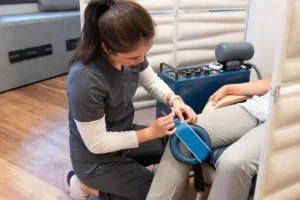
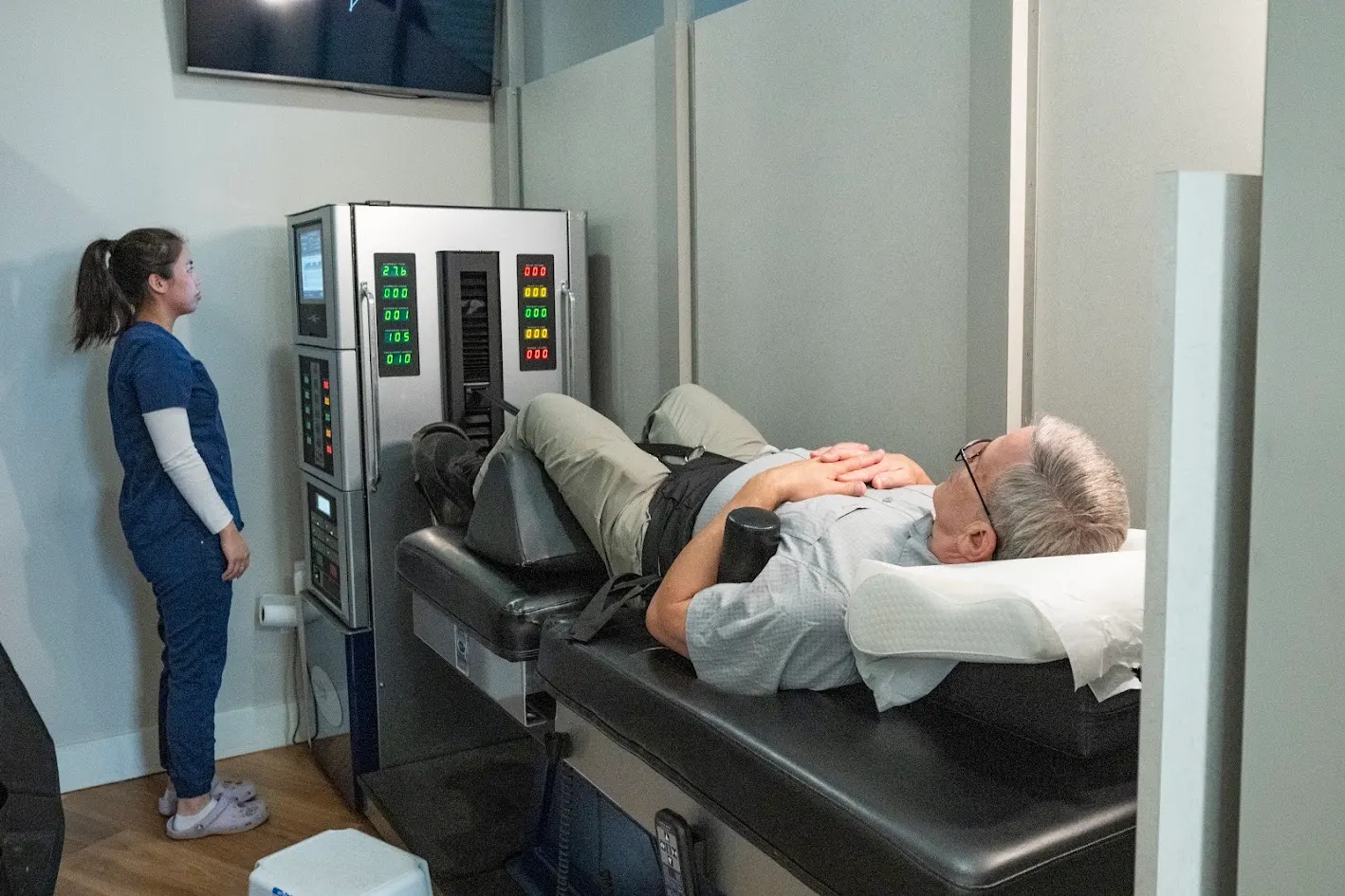
You lie on a padded table and are secured with a pelvic harness. As the session runs, the system slowly applies and releases force. Most patients describe it as a comfortable stretch.
Decompression is often paired with other care. Depending on your plan, we may add chiropractic adjustments, cold laser therapy, or PEMF therapy to calm inflammation and support healing.
A series, not a single session
Decompression is done as a series of sessions rather than a one-time treatment. After your evaluation, we’ll explain how many we recommend and why. We check your progress at each milestone, so you’re never locked into a plan that isn’t working.
Questions to ask before starting decompression anywhere
Not every table labeled “decompression” works the same way. Whether you come to us or go elsewhere, it’s worth asking:
- Is the system computer-controlled, and is each session monitored?
- Who decides whether I’m a good candidate, and how?
- What other care will be paired with it to help prevent the problem from coming back?
- Will you tell me if decompression isn’t right for me?
Clear answers to these questions say a lot about the care you’ll get.
Why training and experience matter
Equipment is only part of the picture. Choosing the right candidates, setting up each session correctly, and knowing when to change course all come from experience. I’ve practiced in Brooklyn since 1981, and disc care has been a major focus of my work.
I hold a Masters Certificate in Non-Surgical Spinal Decompression and was recognized by the International Medical Advisory Board on Spinal Decompression in 2019. I was also recognized as a Founder of the first LIFE University Disc Centers of America Outpatient Center. You can read more about my background.
Decompression is one part of the plan
Taking pressure off a disc helps, but it doesn’t strengthen the muscles that support it. That’s why we pair decompression with physical therapy and strengthening to help keep the problem from coming back. Your care follows our four-milestone approach, so each phase has a clear purpose.
If you’re also weighing injections, our comparison of epidurals and spinal decompression explains how the two differ. For a broader look at disc conditions, visit our spine and disc pain page.
Questions about DRX9000 Decompression
I tried traction and it didn’t help. Could decompression be different?
It may be. The DRX9000 is designed to avoid the muscle guarding that often limits traction, and your evaluation will show whether your condition is a good match.
Does insurance cover spinal decompression?
Spinal decompression may not be covered by insurance. We review costs with you before care begins, and more details are on our costs and insurance page.
Is decompression painful?
Most patients describe it as a comfortable stretch rather than pain. Let us know anytime something doesn’t feel right.
If you want an honest answer about whether decompression makes sense for your back or neck, schedule an evaluation or call us at 718-234-6200. You can also contact us with questions first.