

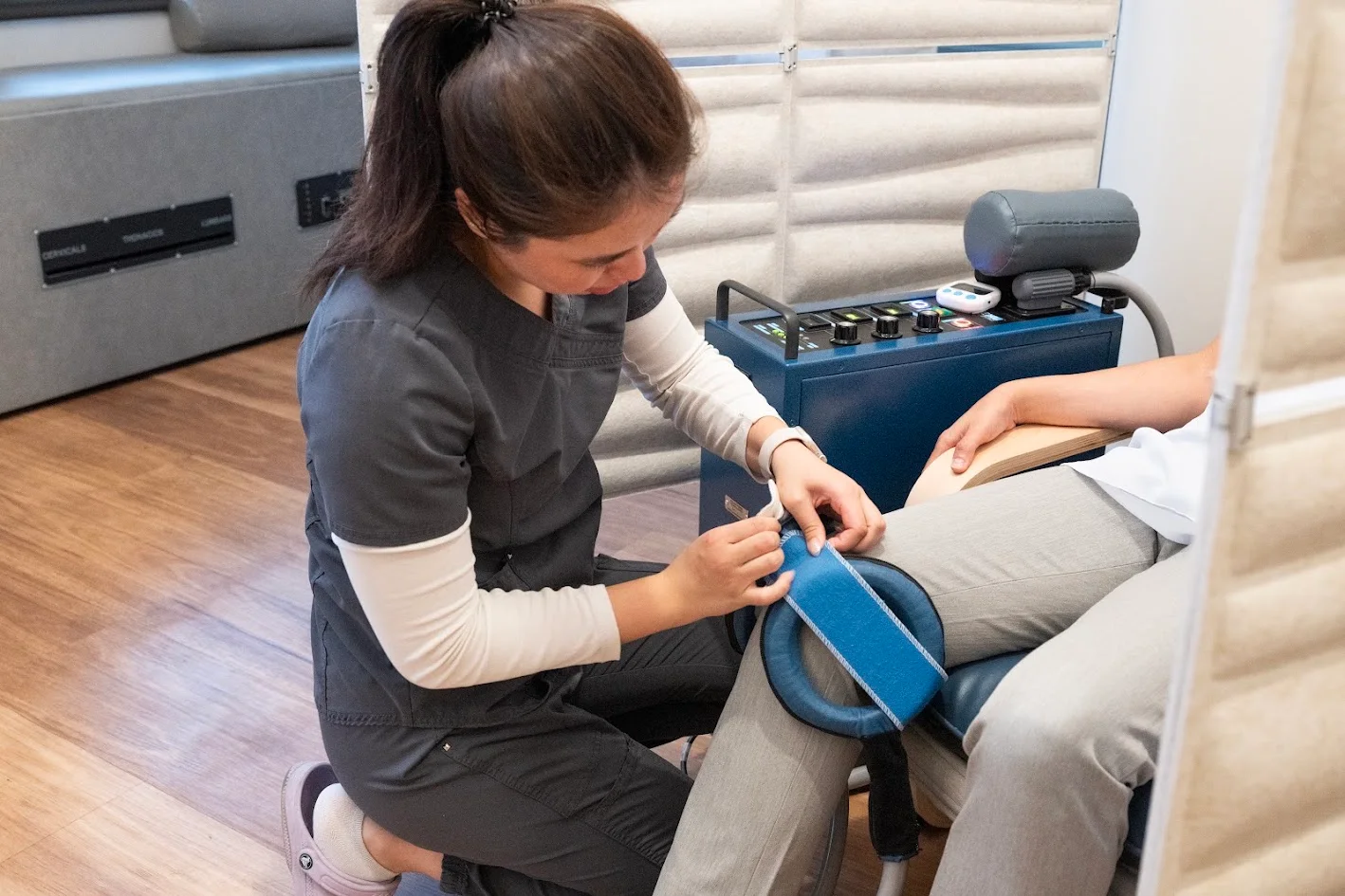
Knee osteoarthritis treatment without surgery focuses on easing pressure inside the joint, calming inflammation, and correcting the hip, ankle, and walking problems that overload the knee. Options like KneeOnTrac knee decompression, cold laser, PEMF therapy, and physical therapy may reduce pain and help you move more comfortably. Severely worn cartilage can’t fully regrow, and for some people a knee replacement is the right choice.
What “bone-on-bone” really means
“Bone-on-bone” is how many people hear their X-ray results explained. It usually means the space between the thighbone and shinbone has narrowed because the cartilage has worn thin. It’s a real finding, and it’s worth taking seriously.
But an X-ray doesn’t tell the whole story. Some people with severe changes on imaging stay active with little pain, while others with milder changes struggle every day. Inflammation, muscle strength, joint pressure, and the way you walk all affect how a knee feels.
That gap between the picture and the pain is where non-surgical care can help.
Brooklyn knees work hard
If you live in a walk-up, you already know how much your knees do. Add subway stairs and carrying groceries up a few flights, and an arthritic knee gets a workout before lunch. Going down stairs is often the hardest part, because the knee has to control your body weight on the way down.
We’ve written about the broader reasons knee pain doesn’t go away. This post focuses on osteoarthritis and the question many patients bring in: is there anything left to try before a knee replacement?
Non-surgical options worth exploring
Our knee pain relief program combines several therapies, chosen based on what your evaluation shows. Not everyone needs all of them.
KneeOnTrac knee decompression
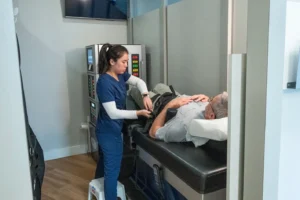
KneeOnTrac applies a gentle, controlled pulling force that opens the joint space slightly. That can ease pressure between the joint surfaces and help move fluid and nutrients through the knee. For an arthritic knee that feels jammed or achy under load, that extra space may bring relief.
Cold laser and PEMF therapy
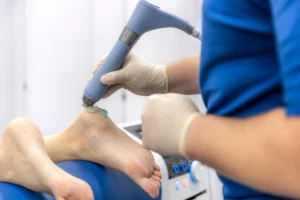
Our Class IV cold laser uses light energy to calm inflammation and support circulation in deeper tissue. PEMF therapy uses pulsed electromagnetic fields to support circulation and ease inflammation in the joint. Neither involves needles, and many patients find PEMF sessions relaxing.
Physical therapy for strength and control
Strong thigh and hip muscles act like shock absorbers for the knee. Our in-house physical therapy builds that support with exercises designed for your knee, not a generic handout. We track your progress from visit to visit.
Chiropractic care above and below the knee
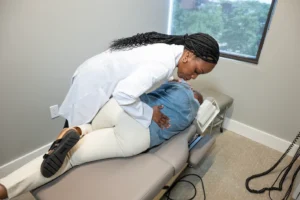
Knees often take the blame for problems that start elsewhere. A stiff hip, an ankle that doesn’t move well, or an imbalance in the pelvis can load one knee unevenly with every step. Chiropractic care for the low back, pelvis, hips, and ankles helps spread that load more evenly.
Where injections and weight fit in
Injections from your physician can calm a painful flare and may be part of your overall plan. We’re happy to work alongside your doctor rather than in place of them.
Extra body weight also adds load to the knees and is linked to inflammation that can slow healing. If that’s part of your picture, we’ll talk about it openly and without judgment. You can read more about how weight and structural stress affect your joints.
Small changes that take pressure off your knees
Day-to-day habits can either add to the strain or ease it. A few that often help arthritic knees:
- On stairs, lead with your stronger leg going up and your sorer leg going down, and hold the rail.
- Break long walks into shorter ones with a rest in between.
- Try low-impact exercise like a stationary bike or swimming to stay active without pounding the joint.
- Wear supportive, cushioned shoes on city sidewalks.
These won’t reverse arthritis, but they can make daily life in a walk-up more comfortable while your care progresses.
When knee replacement is the right call
We don’t believe every knee can or should avoid surgery. Knee replacement can be a life-changing procedure, and for some people it’s the best option. Signs it may be time to talk with an orthopedic surgeon include:
- Pain at rest or at night that keeps you from sleeping
- A knee that is visibly bowed or changing shape
- Daily activities that stay out of reach despite good conservative care
If we believe that’s your situation, we’ll tell you. Some patients also use non-surgical care to stay active while they plan the timing of surgery with their surgeon.
Seek prompt medical care if your knee suddenly becomes hot, red, and swollen, especially with a fever. The same goes for a knee you can’t put weight on after an injury.
How we decide what fits your knee
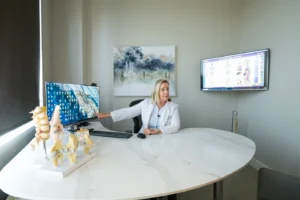
Your first visit is an evaluation only. We look at the knee itself, plus your hips, ankles, lower back, and the way you walk. Common drivers we find include joint compression, cartilage wear, old injuries and scar tissue, and gait problems that load the knee unevenly.
From there, care follows our four-milestone approach: calm the irritation, restore function, build resilience, and maintain your progress if you choose. Progress usually builds over time, and results vary.
One of our patients, Allison, found that stairs, exercise, and squatting had become difficult after an accident. With care, she got back to moving with confidence. You can see the full range of joint pain conditions we help with in Brooklyn.
Questions about Knee Osteoarthritis
Can cartilage grow back?
Severely worn cartilage can’t fully regrow. The goal of non-surgical care is less pain and better function, which often matters more day to day than what the X-ray shows.
Is it too late if a surgeon has recommended a replacement?
Not necessarily. An evaluation can show whether non-surgical care is realistic for your knee, and we’ll be honest if it isn’t.
Does KneeOnTrac hurt?
KneeOnTrac is designed to be gentle, and the pulling force is controlled throughout the session. Let us know at any point if something feels uncomfortable.
If stairs, walking, or getting up from a chair have become a daily struggle, let’s find out what your knee needs. Schedule your first visit, call 718-234-6200, or contact us with questions.