
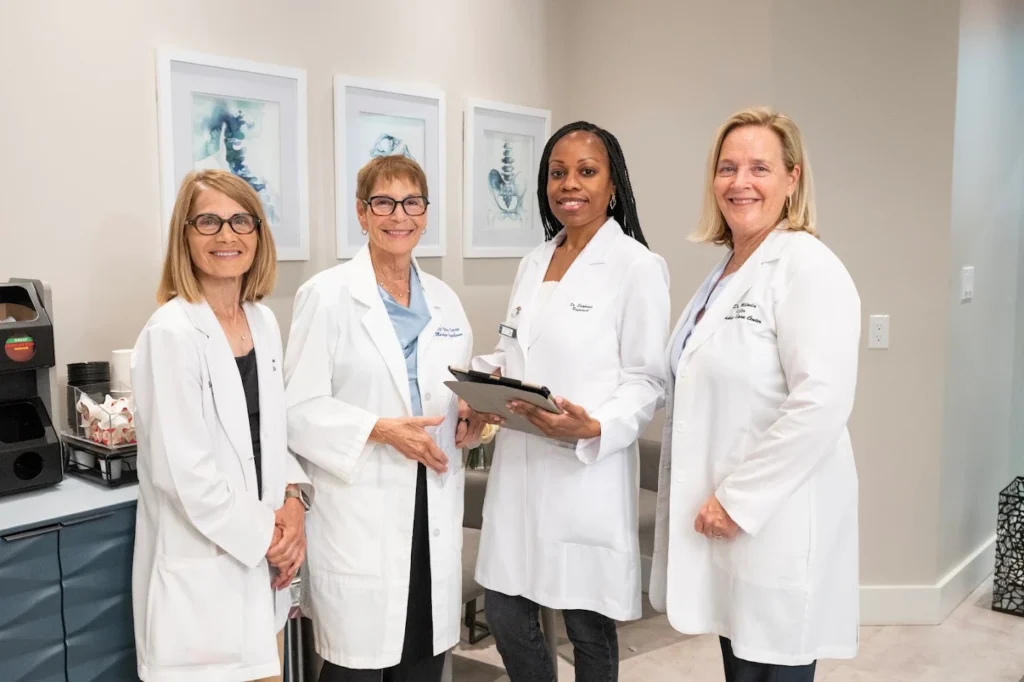



Chiropractic care in Brooklyn NY
Our doctors are trained in multiple chiropractic techniques, including the Pro Adjuster, Applied Kinesiology, Craniosacral Therapy, and Sacral Occipital Technique, so every treatment can be tailored to what your spine needs.
Multiple techniques, chosen for you
Our doctors use a range of chiropractic techniques and choose the right one for your condition and body, instead of applying the same approach to everyone. Dr. Melinda Keller, Dr. Stephanie Raymonvil, and Dr. Fran Sarullo each bring their own training and experience. See how this fits into treatment planning with our approach.
What makes chiropractic care here different:
- Techniques including the Pro Adjuster, Applied Kinesiology, Craniosacral Therapy, Sacral Occipital Technique, manual adjusting, and non-force methods, each chosen based on your exam.
- Your doctor explains what each adjustment is for, so you understand what’s being done and why.
- Care follows a structured, milestone-based plan designed to build lasting progress.
- When appropriate, adjustments are combined with spinal decompression, PEMF, cold laser, shockwave, or physical therapy.
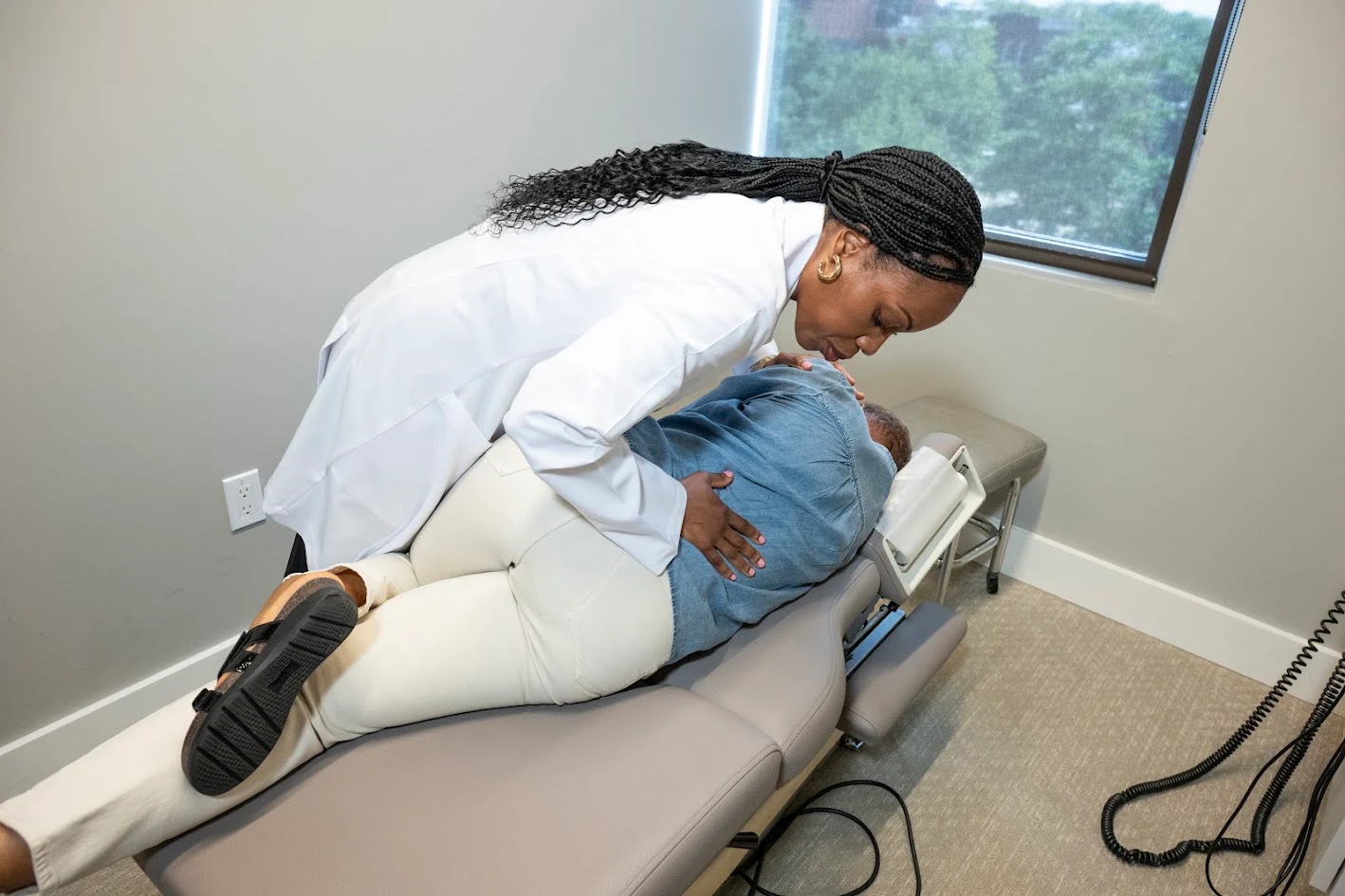
Each technique has a specific purpose
Different techniques work in different ways. Here’s what each one is and when your doctor might use it. Explore all of our services to see how they fit into a complete care plan.
Pro Adjuster instrument adjusting
A computer-assisted instrument that delivers precise, gentle adjustments. A good fit for patients who need a softer approach, including those with acute pain, osteoporosis, recent surgery, or significant degeneration.
Applied Kinesiology (AK)
Uses muscle testing to help your doctor assess how your body is responding and guide decisions about your adjustment.
Craniosacral Therapy
A gentle, hands-on technique focused on the membranes around the brain and spinal cord. Many patients find it relaxing and use it to ease tension in the head, neck, and jaw.
Sacral Occipital Technique (SOT)
Focuses on the relationship between the base of the spine and the base of the skull to improve balance through the spine. Often used for complex posture problems and chronic spinal conditions.
Manual specific adjusting
A skilled high-velocity, low-amplitude thrust to a specific spinal segment, targeted to the exact segment and direction of restriction identified during examination.
Non-force methods
Gentle techniques used when your condition, age, or sensitivity calls for a softer approach.
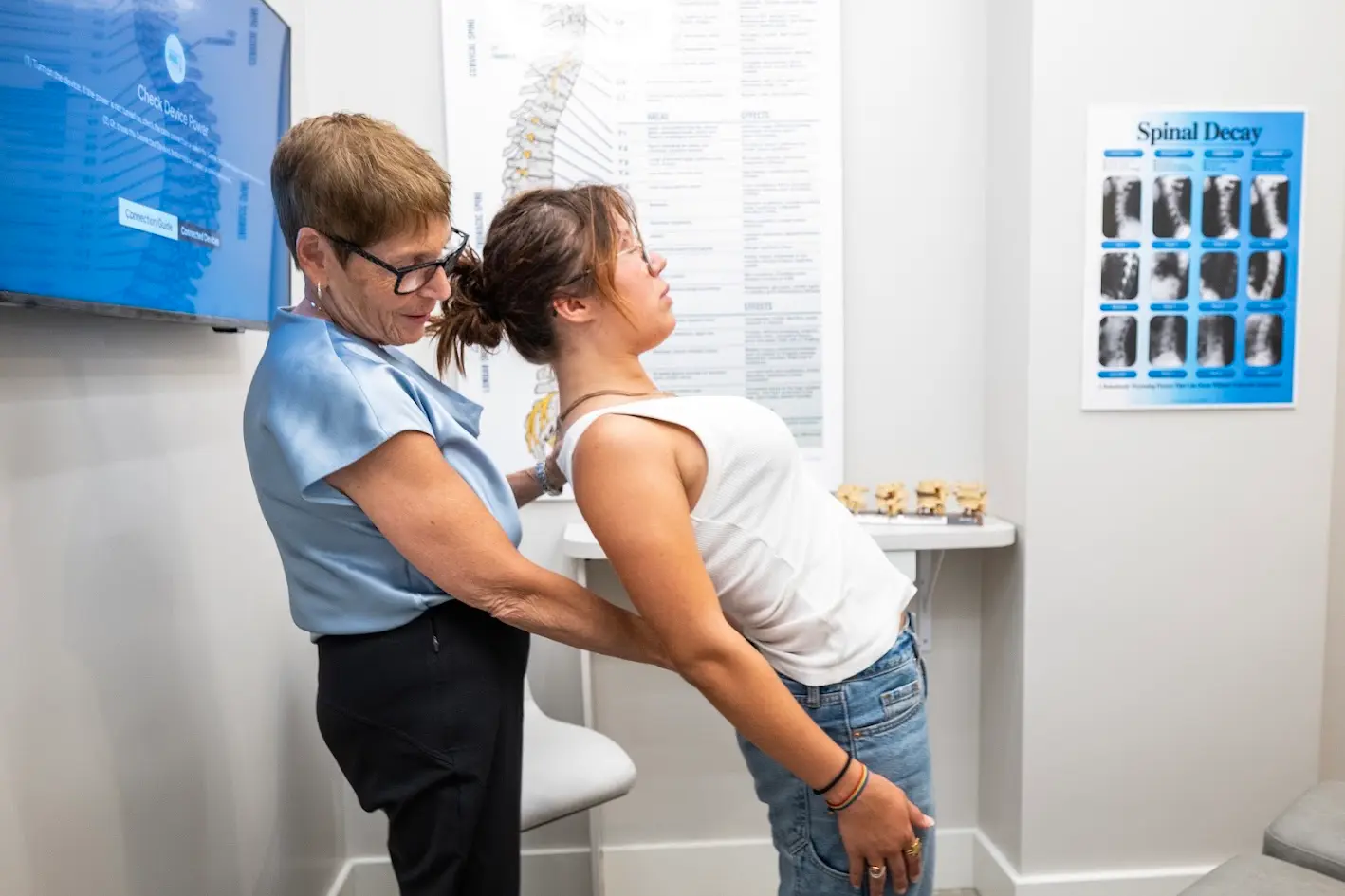
What chiropractic care can help with
Chiropractic care focuses on how your spine and joints move, which can ease pain, improve mobility, and help you move more comfortably day to day. Read what our patients say, or see how our four-milestone approach works.
Reduction in spinal and nerve pain
Relief from back pain, neck pain, sciatica, and nerve-related symptoms as your spine moves better.
Improved range of motion and functional movement
Better joint mobility and easier, more natural movement.
Less tension, more comfort
Many patients find that easing physical tension helps them relax and sleep more comfortably. Learn more about nervous system stress.
Progress that builds over time
As care progresses, improvements tend to last longer between visits.
Questions about Chiropractic Care
1. How do you decide which technique to use on me?
Your doctor chooses a technique based on your exam, spinal mechanics, and diagnosis, and will always explain the reasoning. See what to expect at your first visit.
2. I've had chiropractic care before and it only helped temporarily. Why would this be different?
Temporary relief can happen when the cause wasn’t fully identified, the technique wasn’t the right fit, or care ended early. We start with a thorough evaluation and choose from a range of techniques. Your doctor will be honest about whether our care is a good fit for you.
3. Is chiropractic care safe for disc herniations and nerve compression?
For the right patient, yes. Patients with disc herniations or nerve pressure often do best with non-force or instrument methods instead of high-velocity adjusting. Spinal decompression is also often used alongside chiropractic care for disc problems.
4. How often will I need to come in for adjustments?
It depends on your condition, where you are in care, and how your body responds. Visits are usually more frequent at first and taper off as you improve. Your doctor will explain your recommended schedule. Learn more about our approach.
5. Does chiropractic care at Brooklyn Spine Center involve anything other than spinal adjustments?
Yes. Adjustments are the foundation, and they’re often paired with spinal decompression, PEMF, cold laser, shockwave therapy, or physical therapy. Explore all of our services.