


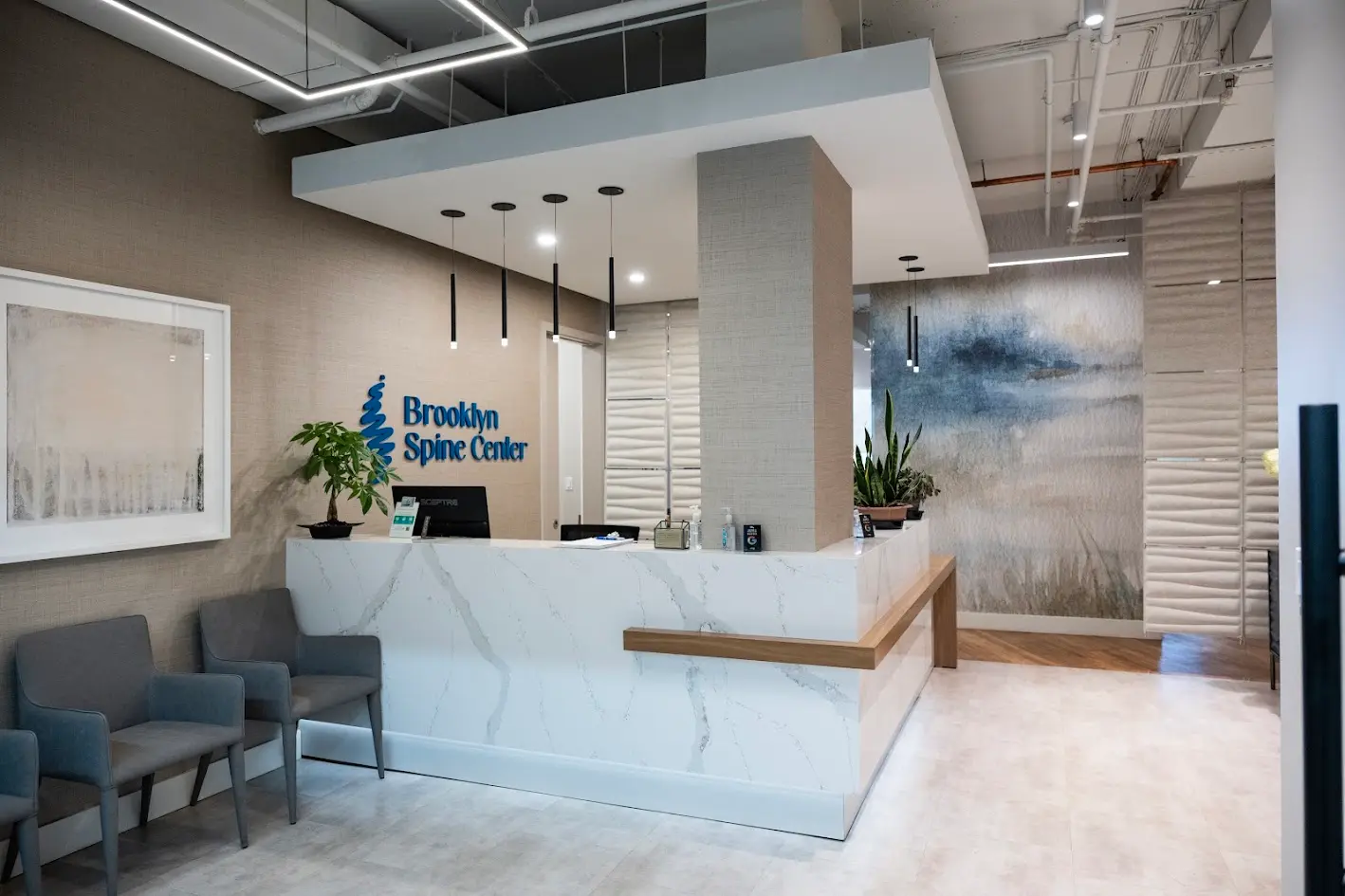

Spine and disc pain treatment in Brooklyn NY

Spine and disc problems are some of the most common reasons patients come to Brooklyn Spine Center. If you’ve been told to rest, take medication, or consider surgery, a thorough evaluation may reveal options you haven’t explored yet.

Spine and disc pain rarely comes from one single cause
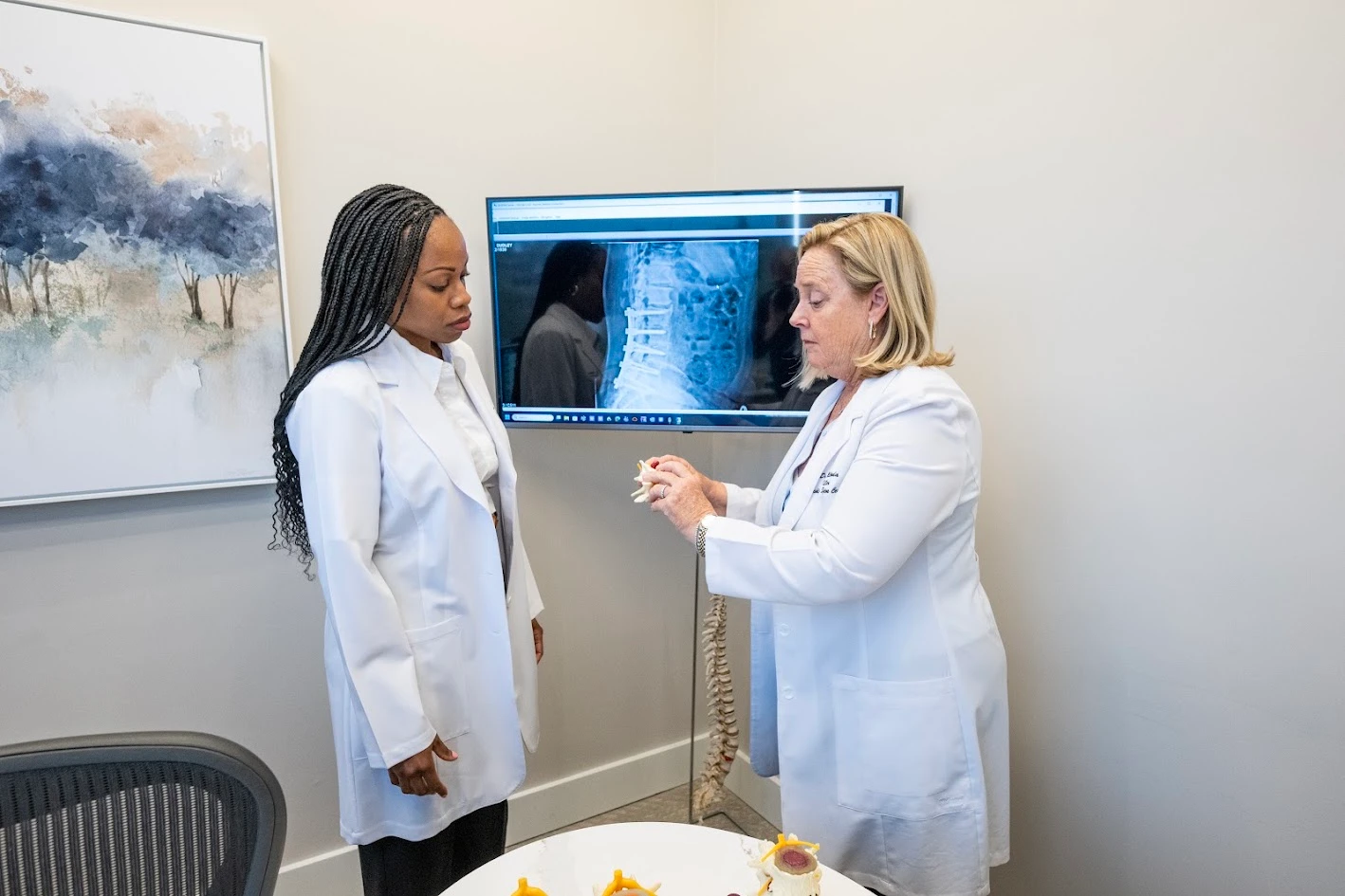
Many patients with spine or disc pain have been dealing with it for a long time. Some have a diagnosis but no clear plan that avoids surgery. Our first step is finding out what’s driving your pain. See what to expect at your first visit, or learn more about our approach.
Two women in white lab coats, one explaining a spinal model while the other listens, with a spinal X-ray on a screen in the background.

Conditions we commonly treat in this category:

Chronic low back pain

Ongoing back pain that hasn’t improved with rest, medication, or past treatment.

Sciatica and radiating leg pain

Burning or aching pain from the lower back through the buttock and down one or both legs.

Disc bulges and herniations

Shifted or ruptured discs pressing on nerves, producing pain, numbness, or weakness.

Spinal stenosis

Narrowing around the spinal cord or nerves that often gets worse with standing or walking.

Pain with standing or walking

Often linked to nerve pressure or disc problems.

Postural dysfunction

Forward head posture or pelvic tilt that adds stress to the discs and muscles over time.

Non-surgical care that addresses the structural source
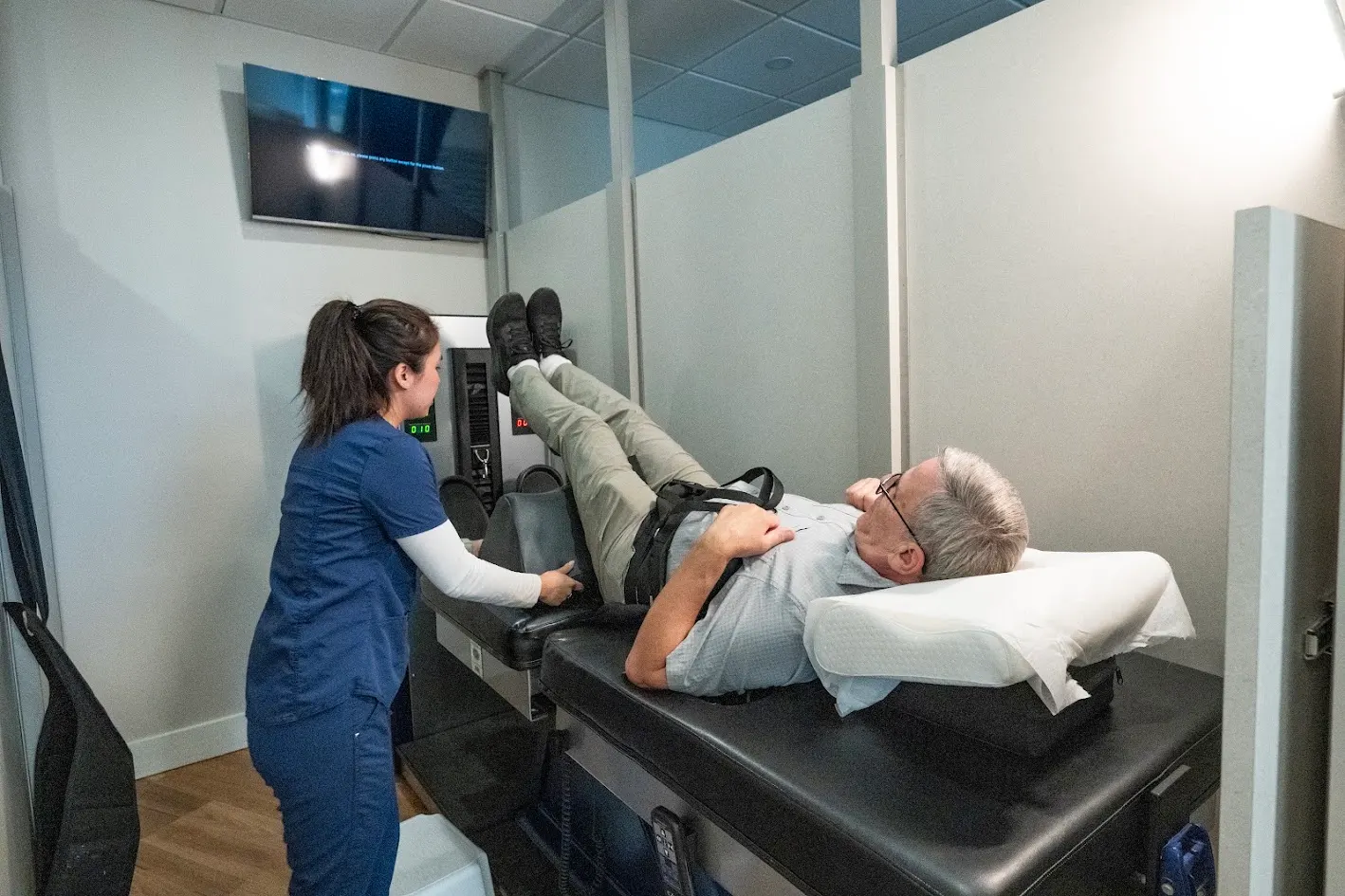
Our goal is to find what’s causing your spine pain and address it, not just manage the symptoms. We combine non-surgical therapies based on your diagnosis and where you are in recovery, with a focus on easing pressure on the discs and nerves and building stability to help prevent future flare-ups. Explore all of our services, or see how our four-milestone approach works.
A medical professional in blue scrubs assists an older man lying on his back on a therapy machine with his legs elevated.

Rest reduces pain, but it doesn’t fix the cause

Rest gives irritated tissue time to calm down, which is why it brings temporary relief. But it doesn’t address the disc pressing on a nerve or the posture habits putting extra load on your spine. Without addressing those, the pain often comes back. Dr. Melinda Keller and our team focus on those underlying causes.

Decompression eases pressure on the disc

The DRX9000 creates negative pressure inside the disc, which can help draw bulging material back in and ease pressure on nearby nerves.

Don’t wait out nerve pressure

Nerve irritation that lasts a long time can be harder to improve, so it’s worth getting evaluated early.

Postural dysfunction compounds disc stress with every passing year

Without correcting the structural patterns that load the spine unevenly, even successfully treated disc conditions tend to recur.

Surgery isn’t always the first step

For many patients, non-surgical care is worth exploring before surgery. We’ll always be honest about whether it’s realistic for you.

Questions about Spine & Disc Pain

1. How do I know if my back pain is disc-related or something else?

Disc problems, muscle issues, joint irritation, and nerve pressure can all cause similar symptoms. Your first visit includes a physical and neurological exam, orthopedic testing, and a review of your history to find out what’s really going on. See what to expect.

2. Is spinal decompression safe for disc herniations and bulges?

For the right candidate, non-surgical decompression on the DRX9000 is a gentle option for disc herniations and bulges. Not everyone is a candidate, so your doctor will evaluate you first and explain what to expect. Learn more about spinal decompression.

3. I've had back pain for years. Is it too late to see results?

Long-standing spine and disc problems can still respond to care, especially when the underlying causes were never addressed. How long you’ve had the problem matters, but it doesn’t rule out improvement. Your evaluation will give you an honest picture of what’s possible.

4. Do I need to bring imaging to my first appointment?

It is helpful but not required, and if you have existing X-rays or MRI reports they provide useful clinical context. If imaging is needed and you do not have it, your doctor will explain what is necessary and why after the initial examination. We do not order imaging routinely, only when it adds real diagnostic value to your case.

5. What other therapies do you offer for spine and disc pain?

Along with chiropractic care, we offer spinal decompression, cold laser, PEMF, shockwave therapy, and physical therapy. Having them in one place lets your care team combine them based on what your spine needs.