Shockwave therapy for plantar fasciitis uses acoustic pressure waves to boost blood flow and stimulate collagen repair in the thick band of tissue along the bottom of your foot. It’s designed for heel pain that has lasted three months or longer and hasn’t improved with rest, stretching, physical therapy, or injections. There are no needles or downtime, and improvement usually builds gradually over a series of sessions.
Why plantar fasciitis hangs on
The plantar fascia runs from your heel bone to the base of your toes and supports your arch with every step. Repeated strain can irritate it where it attaches to the heel. In the early weeks, rest and stretching often help.
When heel pain lasts for months, the problem often changes. The tissue can shift from short-term irritation to long-term breakdown, and the body’s repair process stalls. That’s why some people stretch faithfully and still wince with their first steps out of bed.
Brooklyn is a walking borough. Hard sidewalks, long shifts on your feet, flat shoes in summer, and miles logged around Prospect Park all add up.
Signs it’s plantar fasciitis
- Sharp heel pain with your first steps in the morning
- Pain that returns after sitting for a while
- Aching after long periods of standing or walking
- Tenderness on the inside bottom of the heel
Heel pain isn’t always plantar fasciitis. Pain after a fall, sudden swelling or bruising, or a heel that’s red and hot along with a fever should be checked by a doctor promptly. Burning, tingling, or numbness in the foot may point to a nerve problem such as neuropathy, which we check for during your exam.
How shockwave therapy works
We use the Storz MasterPuls, an extracorporeal shockwave therapy (ESWT) system. It sends acoustic pressure waves into the deeper tendon and soft tissue layers. Those waves stimulate blood flow and collagen production, help break up scar tissue and calcium deposits, and can restart a healing process that has stalled.
In simple terms, shockwave gives chronic tissue a fresh signal to repair itself. You can learn more about shockwave therapy at Brooklyn Spine Center.
Who is a good candidate
Shockwave is meant for chronic problems, not new injuries. You may be a good fit if:
- Your heel pain has lasted three months or more
- Rest, stretching, physical therapy, or injections haven’t given lasting relief
- You’d like to explore options without needles or downtime
It isn’t the right choice for everyone. We don’t use shockwave on acutely inflamed tissue, open wounds, active infections, or over implanted electronic devices. People with clotting disorders or who take blood thinners also aren’t candidates.
For newer injuries, cold laser or PEMF therapy is usually a better fit. We’ll recommend what matches where you are in the healing process.
Why we evaluate before recommending shockwave
Having the equipment doesn’t mean every heel gets shockwave. Every recommendation we make has a clinical reason, and we don’t apply every therapy to every patient.
Your first visit is an evaluation only, with no treatment. We confirm whether plantar fasciitis is really the source of your pain, look for anything that would rule shockwave out, and check how your ankle, knee, and hip are moving. Then we explain what we found and what we recommend on your second visit, including costs, before care begins.
What a session feels like
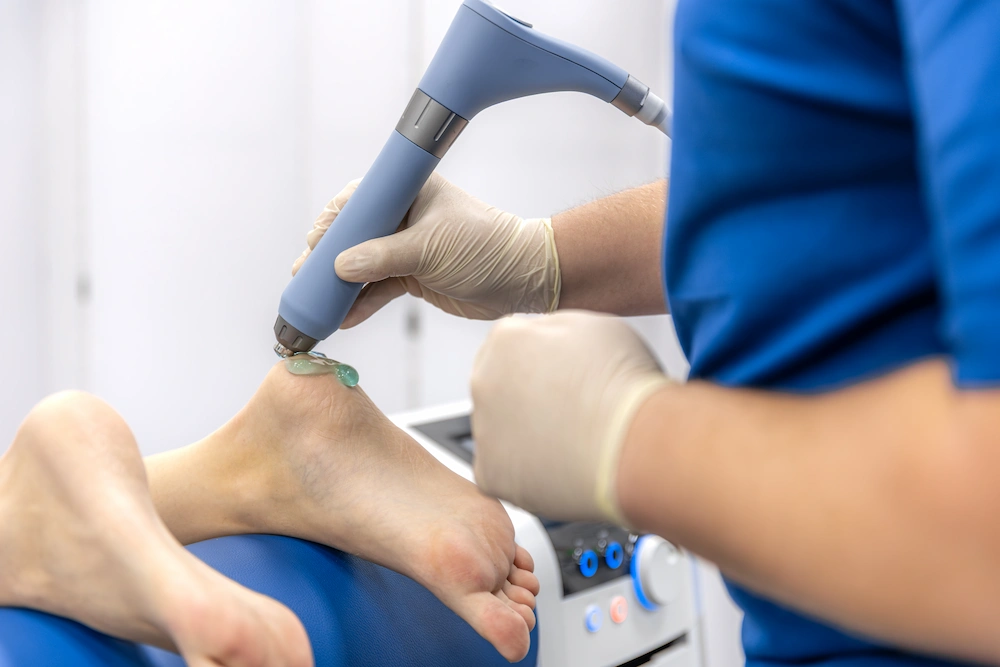
We apply a small amount of ultrasound gel to your heel, then use a handheld applicator to deliver pressure pulses. The intensity starts mild and builds gradually. You’ll feel the pulses, and we adjust the intensity based on your comfort.
It’s normal for the heel to feel sore for a day or two afterward. There’s no downtime, so most people go straight back to work or home after a session.
What progress usually looks like
Shockwave doesn’t work like a switch. Because it encourages the tissue to repair itself, changes tend to build over several weeks rather than all at once.
One of the simplest ways to track progress is those first steps in the morning. Many people notice that the sharp pain eases or fades sooner than it used to. Results vary, and we check in on your progress at every visit so we can adjust the plan if needed.
What you can do at home while you heal
Your daily habits can support the work we do in the office. A few simple changes often help:
- Gently stretch your calves and arches before you get out of bed.
- Wear supportive shoes at home instead of going barefoot on hard floors.
- Ease back into running or long walks gradually rather than all at once.
- Ice the bottom of your foot after a long day on your feet.
If you put in a lot of miles this fall, whether training for the NYC Marathon or just walking more, give your feet time to recover before ramping back up.
Shockwave and cortisone shots
Cortisone injections can calm heel pain, and for some people they work well. Many of the patients we see for shockwave have already had one or more shots that helped for a while and then wore off.
The two work differently. Cortisone quiets inflammation, while shockwave aims to restart the tissue’s own repair process. They aren’t competing tools, and your physician can help you weigh what fits your situation.
Treating the whole foot, not just the heel
Heel pain often gets help from above. Tight calves, a stiff ankle, or a hip or knee problem that changes how you walk can all overload the plantar fascia. During your evaluation, we look at how your whole leg moves, not just where it hurts.
That’s why shockwave is often paired with other care. Our in-house physical therapy builds calf and foot strength, and chiropractic care can address ankle, knee, or hip mechanics.
Plantar fasciitis is one of several joint and soft tissue problems we treat in Brooklyn, along with Achilles pain, tennis elbow, and rotator cuff irritation.
Questions about Shockwave for Plantar Fasciitis
How many sessions will I need?
It depends on how long you’ve had symptoms and how your tissue responds. We’ll outline a plan after your evaluation and track your progress as we go.
Is shockwave therapy covered by insurance?
Coverage varies by plan. We go over costs with you before care begins, and you can read more on our costs and insurance page.
Can I keep walking and working during treatment?
Yes. There’s no downtime, though your heel may be sore for a day or two after a session.
If heel pain has been with you for months, a thorough evaluation is the first step toward a clear plan. Schedule your visit or call us at 718-234-6200. You can also send us a question.