


Knee pain relief at Brooklyn Spine Center
Knee pain that limits your stairs, walks, or sleep deserves a closer look. Brooklyn Spine Center uses the KneeOnTrac decompression system alongside cold laser and PEMF therapy to help relieve knee pain without surgery.
Finding what’s behind recurring knee pain
When knee pain keeps coming back, it’s often because the underlying cause hasn’t been fully addressed. We evaluate your knee for the mechanical and tissue-level factors behind your pain, including joint compression, cartilage wear, past injuries, and how your hips and spine load the knee.
What we commonly find driving persistent knee pain:
- Joint compression that narrows the space in the knee and irritates the joint lining.
- Cartilage wear that can lead to stiffness, grinding, and instability over time.
- Old injuries that left behind scar tissue or changed how the knee moves.
- Hip, gait, or low back problems that put uneven load on the knee.
Three therapies that work at the joint level
Our knee pain program combines KneeOnTrac decompression, cold laser, and PEMF therapy, sequenced within our four-milestone approach.
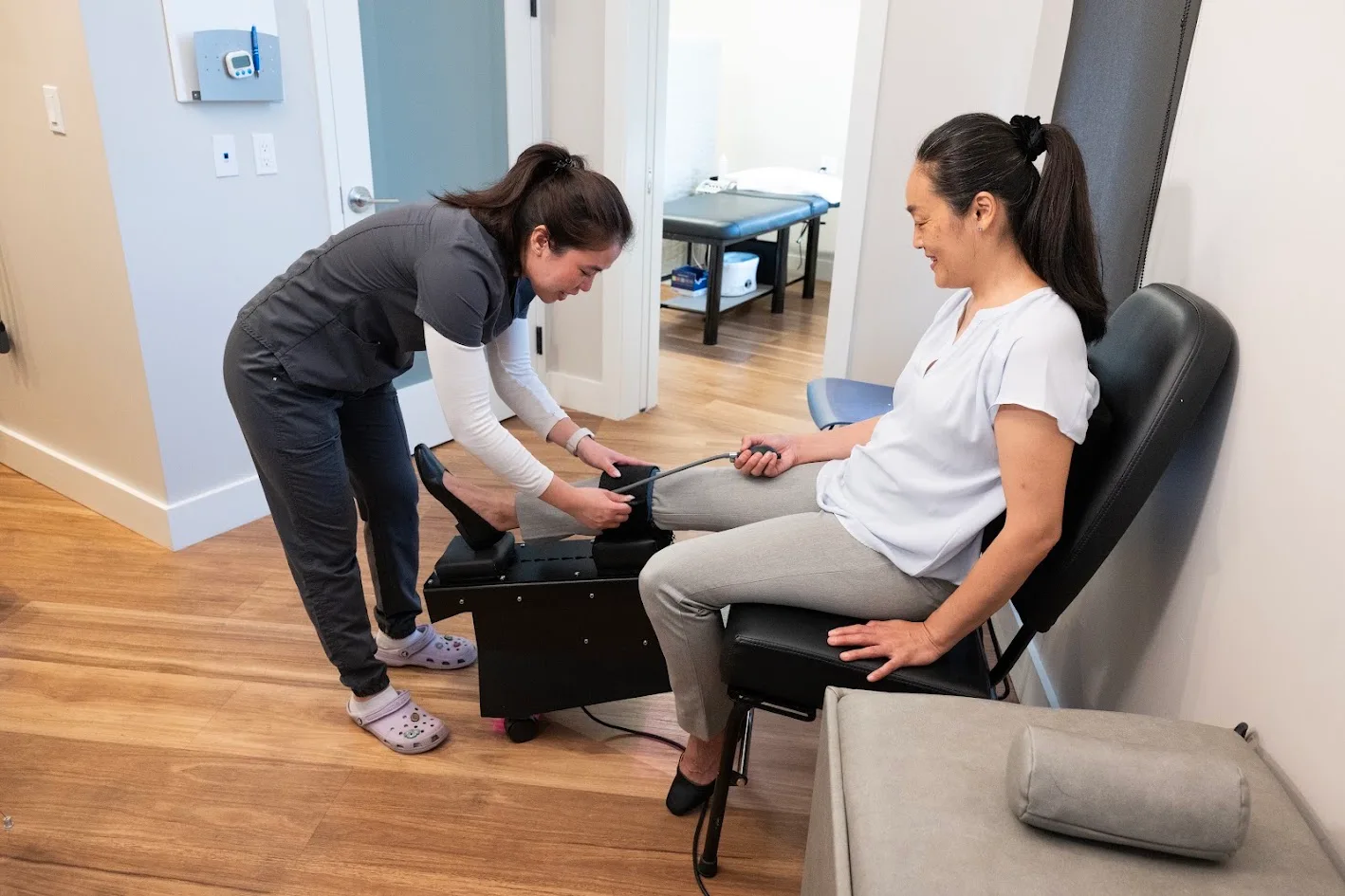
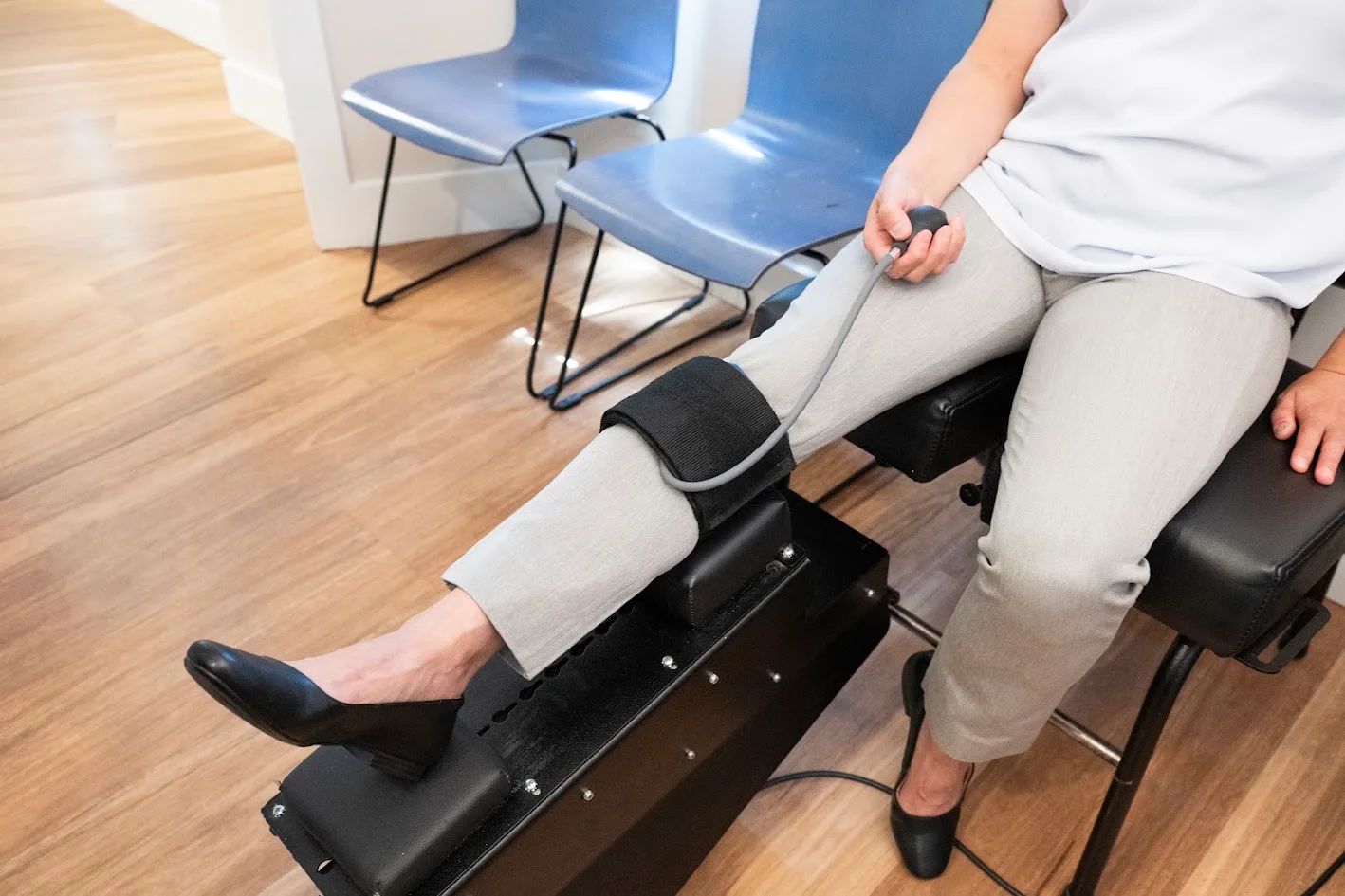
KneeOnTrac knee decompression
Applies a gentle, controlled pulling force to the knee to open the joint space, ease pressure between joint surfaces, and help move fluid and nutrients through the joint.
Cold laser therapy with the MedRay QuantumX
Helps calm inflammation in the knee and supports healing in the tendons, ligaments, and surrounding tissue.
PEMF therapy with the Pulse XL Pro
Supports circulation and cellular energy in and around the joint to help ease inflammation.
Chiropractic care for the mechanics around the knee
KneeOnTrac
Exploring non-surgical options before knee surgery
Decompression targets joint compression
KneeOnTrac addresses the joint space narrowing that often drives knee pain, without permanently changing the joint.
Cartilage needs the right environment
Severely worn cartilage can’t fully regrow, but easing pressure and supporting circulation gives the joint a better environment for healing.
Injections aren’t the only option
Cortisone can help with inflammation in the short term. Our care focuses on the mechanical and tissue factors behind your pain.
Surgery is a big decision
Knee replacement is permanent, so trying conservative care first is a reasonable step for many patients.