Spinal stenosis treatment usually starts with non-surgical care that eases pressure on the nerves, restores movement, and strengthens the muscles that support your spine. For many people with stenosis in the lower back, a mix of spinal decompression, chiropractic care, and physical therapy may reduce leg pain and make walking easier. Surgery is sometimes the right choice, especially when nerve symptoms are severe or getting worse.
What spinal stenosis is
Spinal stenosis means the spaces around your spinal cord or nerve roots have narrowed. That narrowing can squeeze the nerves and cause pain, numbness, or weakness. It’s most common in the lower back, though it can also happen in the neck.
Several things can crowd those spaces over time:
- Bulging or degenerating discs
- Thickened ligaments along the spine
- Bone spurs and arthritis in the small joints of the spine
Most people with lumbar stenosis are over 50, and many have had back trouble on and off for years. It rarely comes from one event. It usually builds slowly.
Stenosis in the neck can look different. Instead of leg pain, it may cause neck stiffness, arm pain, or numbness in the hands. If you notice clumsy hands, trouble with buttons, or changes in your balance, see your physician promptly, since these can be signs of pressure on the spinal cord.
The classic sign: relief when you lean forward
Stenosis has a pattern that’s easy to recognize once you know it. Walking or standing brings on pain, heaviness, tingling, or fatigue in the buttocks and legs. Sitting down or bending forward eases it within a few minutes.
The medical term is neurogenic claudication. Patients describe it in everyday ways: needing to sit after a few blocks, leaning on the cart at the grocery store, or dreading a long wait on a crowded Brooklyn subway platform. Bending forward opens the space around the nerves slightly, which is why leaning helps.
Stenosis or something else?
Leg pain with walking isn’t always stenosis. Poor circulation in the leg arteries can cause similar symptoms, and so can a herniated disc pressing on a single nerve. Circulation-related leg pain often eases when you simply stop and stand still, while stenosis usually needs you to sit or bend forward.
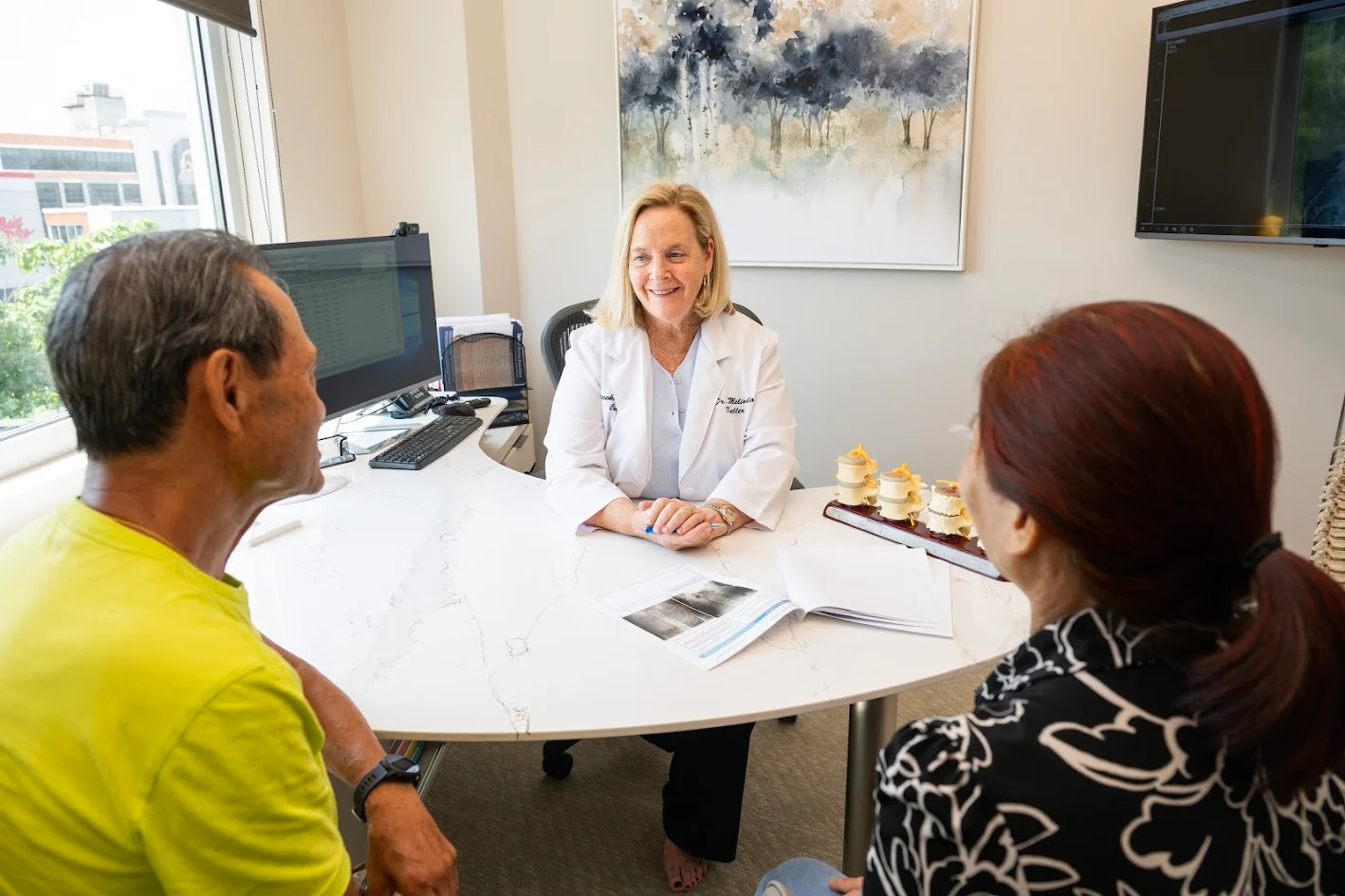
That’s why we never assume. A full evaluation helps sort out what’s driving your symptoms, and if we suspect a circulation problem, we’ll refer you to your physician. If your pain shoots down one leg like an electric shock, our post on sciatica relief may also help.
Symptoms that need urgent care
A few symptoms mean you should go to an emergency room rather than wait for an appointment:
- New trouble controlling your bladder or bowels
- Numbness in the groin or inner thighs
- Leg weakness that is getting worse quickly
These can signal severe nerve compression that needs immediate medical attention.
Non-surgical stenosis treatment options
At Brooklyn Spine Center, stenosis care is built around what’s causing your narrowing and how your body moves. Most plans layer a few approaches in a set order rather than relying on just one.
Spinal decompression on the DRX9000
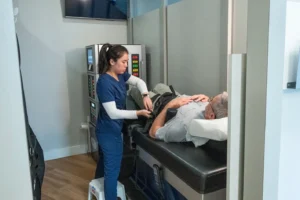
Our DRX9000 system targets the affected spinal level with a gradual, computer-controlled force that avoids the muscle tightening regular traction can cause. It creates negative pressure inside the disc, which may help ease pressure on nearby nerves. You can read more about how spinal decompression works.
Decompression tends to be most helpful when bulging or degenerating discs are part of the narrowing. When the crowding comes mostly from bone, the response can be different, and we’ll tell you that honestly before you start.
Chiropractic care matched to your spine
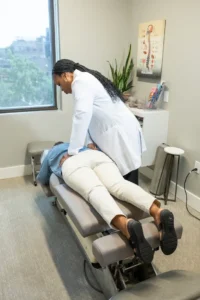
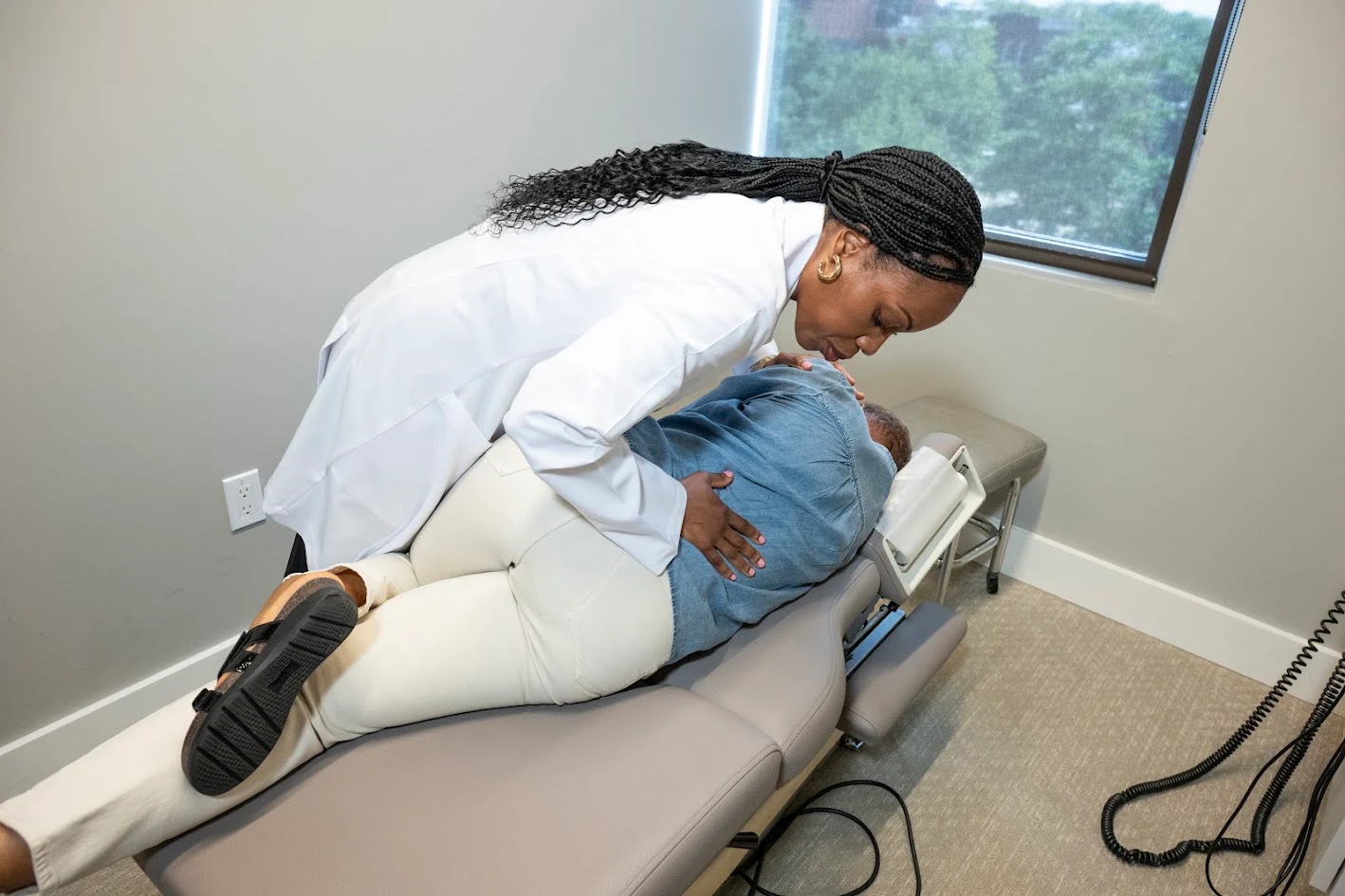
Many people with stenosis have significant degeneration, so we often use gentle, non-force methods or the Pro Adjuster instrument rather than forceful adjusting. The goal is to improve how the joints in your lower back and pelvis move without irritating the nerves. Learn more about our chiropractic techniques.
Physical therapy to build walking tolerance
Strong hip and core muscles help support the spine and take pressure off irritated areas. Our in-house physical therapy uses exercises built for your condition, often including movements that favor a slight forward bend. Over time, the aim is to help you walk farther before symptoms start.
Supporting therapies
Cold laser therapy and PEMF therapy may be added to help calm inflammation and support recovery between sessions. Not every patient needs them, and we only recommend them when there’s a clinical reason.
Daily habits that may ease stenosis symptoms
What you do between visits matters too. Small changes can make standing and walking more manageable while your care progresses.
- Plan short sitting breaks during long errands instead of pushing through the pain.
- Try a stationary bike, since the slightly forward-leaning position is often easier on stenosis than walking.
- When you stand for a while, rest one foot on a low step or rail to take pressure off your lower back.
- Keep walking in short, regular doses rather than avoiding it, because staying active helps protect strength.
None of these replaces care, but they can help you stay active while we work on the underlying problem.
Where epidurals and surgery fit
Epidural steroid injections can calm nerve inflammation and give meaningful relief for some people. We don’t see them as the enemy. If you’re weighing the two, our comparison of epidurals and spinal decompression walks through the differences.
Surgery is also a valid option. When stenosis causes progressive weakness, severe nerve compression, or pain that hasn’t responded to good conservative care, a surgical consult may be the right next step. If we believe that’s where you are, we’ll say so.
What care looks like over time
Stenosis care follows our four-milestone approach. First we work to calm irritation and pressure. Then we restore function, build strength to help prevent flare-ups, and, if you choose, move into ongoing care to stay ahead of future problems.
Progress usually builds gradually. Often the first change patients notice is that they can stand or walk a little longer before the familiar heaviness sets in. Since I started practicing in Brooklyn in 1981, I’ve seen how much those small gains matter in daily life.
You can read more about the spine and disc conditions we treat.
Questions about Spinal Stenosis
Can spinal stenosis get better without surgery?
The narrowing itself may not reverse, but symptoms often can improve. Easing pressure, improving movement, and building strength may help you walk and stand more comfortably.
Can I have decompression if I’ve had back surgery?
Spinal hardware from a past surgery rules out decompression at those levels. Some post-surgical patients may still qualify at levels near the surgical site, which we determine during your evaluation.
Do I need an MRI first?
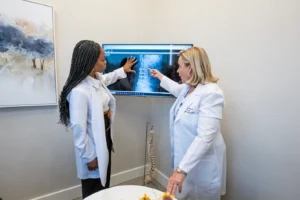
No. If you already have an MRI or X-rays, bring them along, since they can help us understand your case.
If walking or standing has become harder than it should be, we’ll give you a clear picture of what’s going on. Schedule your first visit, call 718-234-6200, or reach out with questions.